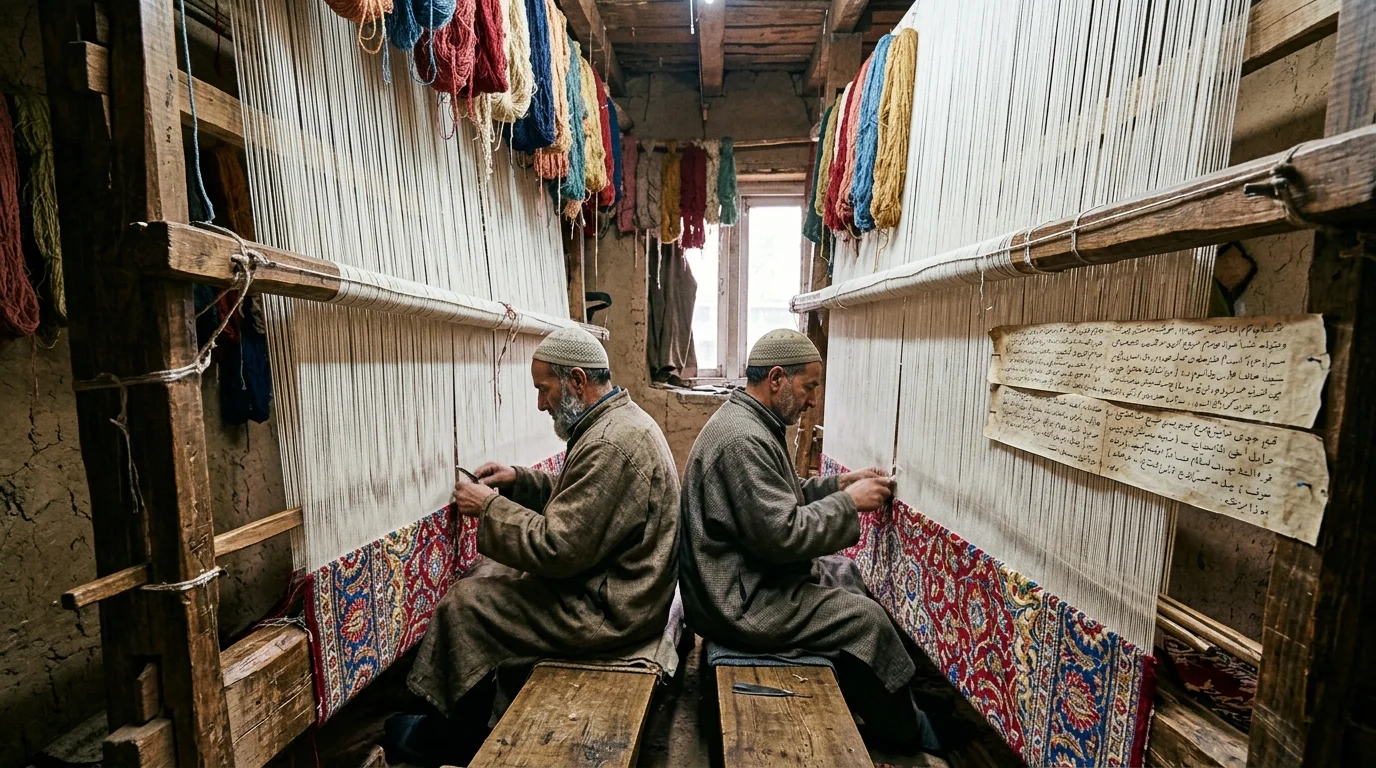
A Kashmiri hand-knotted carpet (Kalbaffi) is a world-class heirloom textile woven on vertical wooden looms using the ancient Persian Senneh knot (double knot) guided by coded phonetic script known as the Talim. Introduced to Kashmir in the 15th century by Sultan Zain-ul-Abidin (Badshah) who invited master carpet weavers from Persia and Samarkand, Kashmiri silk carpets feature extraordinarily dense knot structures—ranging from 400 to over 900 knots per square inch (KPSI). When viewed from one direction, a pure silk carpet gleams like spun gold; viewed from the opposite side against the pile, its deep jewel tones (sapphire blue, ruby red, emerald, and ivory) deepen dramatically. However, the carpet trade in Kashmir is notorious for high-pressure sales rooms where naive tourists are sold machine-made Belgian viscose or mercerized cotton blends at genuine silk prices. This guide equips you with exact technical checks, knot-density calculations, and fair market values.
1. Quick Reference: Kashmiri Carpet Classifications & 2026 Pricing
| Carpet Composition | Knot Density (KPSI) & Weaver Timeline | Tactile Feel & Light Reflectance | Fair Ground Price (2026, 3x5 ft / 4x6 ft) |
|---|---|---|---|
| Pure Mulberry Silk on Silk Warp | 600 – 900+ Knots/sq. inch · 9 to 24 months hand-weaving | Liquid drape; dramatic color shift under light; cool silky touch | ₹65,000 – ₹1,80,000 (3x5 ft) · ₹1,40,000 – ₹3,50,000+ (4x6 ft) |
| Pure Silk Pile on Cotton Warp | 350 – 550 Knots/sq. inch · 6 to 12 months hand-weaving | Sturdy body, vibrant pile; excellent high-traffic durability | ₹35,000 – ₹75,000 (3x5 ft) · ₹65,000 – ₹1,30,000 (4x6 ft) |
| Fine Kashmiri Wool on Cotton Warp | 200 – 400 Knots/sq. inch · Warm local fleece dyed naturally | Plush thick pile, matte finish; ideal for cold winter flooring | ₹18,000 – ₹38,000 (3x5 ft) · ₹32,000 – ₹65,000 (4x6 ft) |
| Mercerized Cotton / "Art Silk" (Viscose Fake) | Machine-woven or low knot density (under 150) · Chemically treated | Feels slippery or chalky; zero natural warmth; fibers pull out easily | ₹5,000 – ₹15,000 (Commonly scammed at ₹60,000+) |
2. The Knot Density (KPSI) Mathematical Formula
Knot density is the universal international standard of carpet craftsmanship. To calculate the knot count yourself on the reverse side of any rug:
- Turn the carpet upside down. Real hand-knotted carpets have no latex backing, canvas gluing, or cloth lining—the entire pattern appears on the underside in sharp, clear miniature pixels.
- Place a regular centimeter or inch ruler against the exposed underside knots.
- Count the individual knots along one inch horizontally (warp) and one inch vertically (weft).
- Multiply horizontal knots by vertical knots:
Horizontal Knots × Vertical Knots = Knots Per Square Inch (KPSI). A 24 × 24 count yields 576 KPSI—an exceptional hand-knotted silk carpet that took months of painstaking micro-knotting.
3. The "Art Silk" Trap: How to Distinguish Real Mulberry Silk from Rayon
Shady showrooms use deceptive phrasing like "Artificial Silk", "Bamboo Silk", or "Staple Silk" to trick buyers into believing they are purchasing real silk. These are trade euphemisms for viscose rayon or mercerized cotton produced from chemically dissolved wood pulp. Here is how to test on the spot:
- The Fringe Burn Test: Snip a 5 mm thread from the exposed warp fringe tassel. Pure natural mulberry silk burns slowly with the characteristic smell of burning hair, leaving behind dark, soft, crushable ash. Synthetic artificial silk burns with a bright flame, smells of burning paper or burning wood, and does not crush into keratin powder.
- The Palm Friction Thermal Test: Rub the palm of your hand briskly over the surface pile for 10 seconds. Real silk warms up dramatically under friction, transferring gentle heat back to your skin. Rayon and synthetic cotton remain cold and clammy.
- The GI QR Tag: The J&K Handicrafts Directorate launched the official QR-code-based GI label for hand-knotted Kashmiri carpets. The tag contains optical codes that reveal the master weaver's photograph, exact loom registration, knot density, and laboratory fiber test certificate.

Experienced Kashmir travel guide specializing in female solo travelers, family trips, winter sub-zero packing systems, and offbeat meadow trails like Doodhpathri and Yusmarg.
🛡️ Ground-Verified Fact Checking • Srinagar Travel Desk
Plan Your Kashmir Journey with Local Confidence.
Have questions about official taxi union rates, Gondola booking windows, or current seasonal weather? Tell us your dates. Our Srinagar desk verifies your plan and gives you honest local advice in 4 hours.