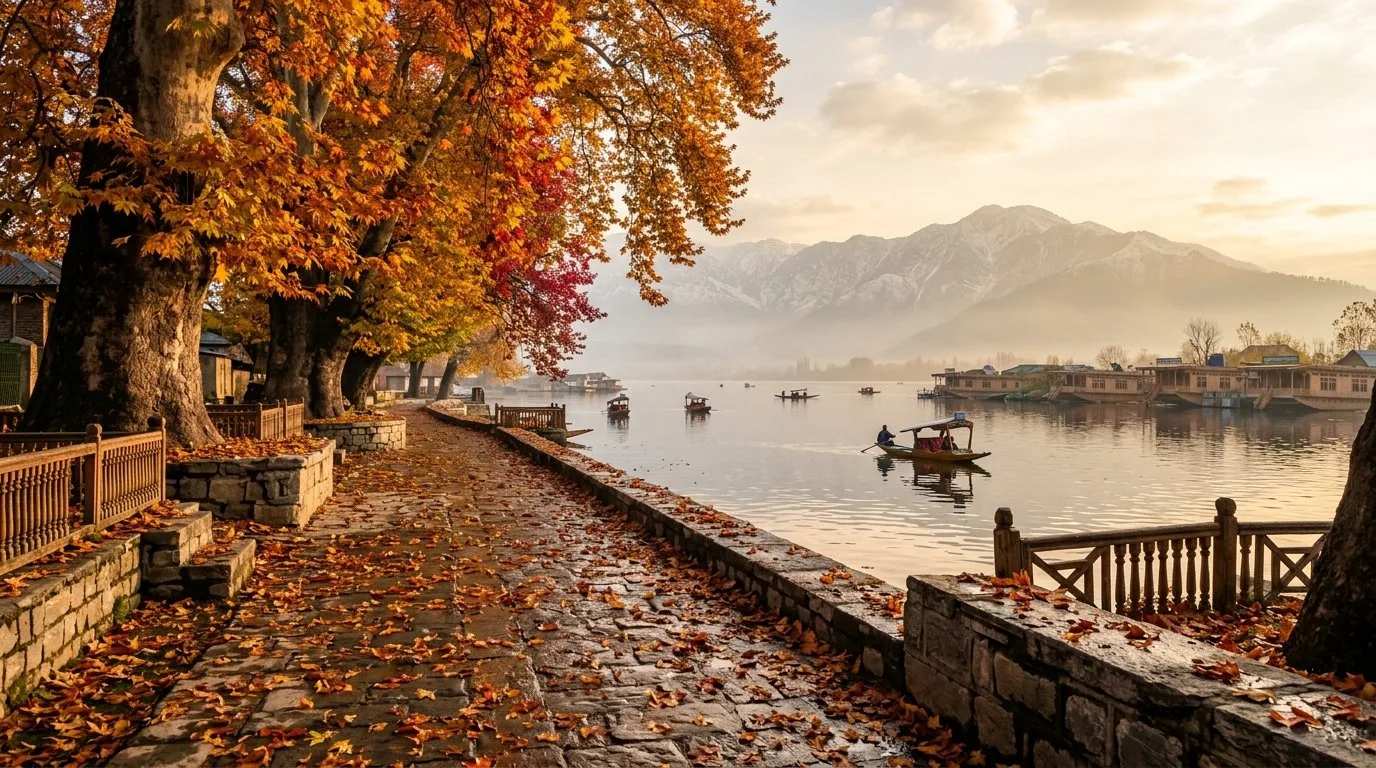
Kashmir is a true year-round destination, with each of its four distinct seasons offering a completely different visual landscape and travel experience. Whether you are seeking deep powder snow in Gulmarg, 1.5 million blooming tulips in Srinagar, lush green alpine meadows in Pahalgam, or golden crimson Chinar foliage in autumn, choosing the right month is essential for planning your trip. Here is the definitive, ground-verified guide to the best time to visit Kashmir, covering month-by-month weather, snowfall elevations, festival dates, hotel pricing trends, and seasonal packing tips.
1. Kashmir Season-by-Season Executive Summary
Before diving into month-by-month microclimates, here is a high-level summary of Kashmir's four major travel seasons:
- Spring (March to April): Blooming Tulip Garden in Srinagar, almond blossoms in Badamwari, crisp pleasant air, melting mountain snow caps. Temperature: 8°C to 18°C. Best for flower lovers, couples, and mild weather.
- Summer (May to August): Perfect escape from mainland India's summer heat wave. Lush green alpine meadows, open mountain passes (Zoji La, Razdan Pass), white-water rafting in Pahalgam, Kashmir Great Lakes (KGL) trekking. Temperature: 15°C to 28°C. Best for families, honeymooners, and high-altitude trekkers.
- Autumn (September to November): Golden crimson Chinar tree leaves, purple saffron flower harvesting in Pampore, dry clear skies, crisp cool breeze. Temperature: 5°C to 20°C. Best for budget travelers, photography enthusiasts, and honeymoon couples.
- Winter (December to February): Deep snow accumulation in Gulmarg and Pahalgam, world-class powder snow skiing, frozen lake edges, traditional winter Harissa feasts. Temperature: -10°C to 8°C. Best for snow lovers, skiers, and winter adventure seekers.
2. Spring in Kashmir (March to April) — The Flower Blooming Season
Spring is when the Kashmir Valley awakens from its winter slumber. As snow melts from valley floors, millions of wildflowers, fruit blossoms, and tulips erupt into bloom across Srinagar and surrounding districts.
Indira Gandhi Memorial Tulip Garden (Late March to Mid-April)
The crown jewel of spring is the opening of Asia's largest tulip garden, situated at the foothills of the Zabarwan Mountain Range overlooking Dal Lake in Srinagar. Open for just 3 to 4 weeks between late March and mid-April, the garden showcases over 1.5 million tulip bulbs across 65 distinct varieties, planted alongside hyacinths, daffodils, and ranunculus. Entry tickets are priced at ₹75 for adults and ₹30 for children. Visiting during early morning hours (8:00 AM to 10:00 AM) ensures smaller crowds and optimal photography light.
Almond Blossoms at Badamwari (Late March)
In late March, the historic Badamwari Garden located in Old Srinagar (Shehr-e-Khas) comes alive with pink and white almond blossoms. Historically, local Kashmiris celebrated the arrival of spring by gathering under Badamwari's blooming trees with traditional Samovars of brewed Kahwa tea.
Mustard Fields in Pulwama & Anantnag (April)
In April, driving along the National Highway (NH44) between Pampore, Pulwama, and Anantnag reveals vast yellow carpets of blooming mustard fields set against snow-capped Himalayan peaks in the background.
Recommended for: Couples, flower lovers, photographers, and senior citizens seeking comfortable weather without severe winter cold or heavy summer tourist traffic.
3. Summer in Kashmir (May to August) — Escaping Heat & High Alpine Treks
Summer is peak tourist season across the Kashmir Valley. While plain cities in mainland India (Delhi, Punjab, Gujarat, Maharashtra) suffer temperatures above 40°C, Srinagar remains pleasant at 22°C to 28°C, while hill stations like Gulmarg, Pahalgam, and Sonamarg stay cool at 14°C to 22°C.
Summer Highlights & Key Outdoor Activities
- Lidder River White-Water Rafting: Operating in Pahalgam (Movera and Yanner stretches) from May through August, offering Grade II and Grade III rapids. Tariffs range from ₹1,000 to ₹1,800 per person based on distance.
- High-Altitude Alpine Treks: The world-famous 7-day Kashmir Great Lakes (KGL) Trek (Sonamarg to Naranag) and Tarsar-Marsar Trek operate strictly from July 1st to September 15th when high mountain passes (Nichnai Pass 13,500 ft, Gadsar Pass 13,750 ft) melt completely free of snow.
- Holy Amarnath Yatra Pilgrimage: The annual pilgrimage takes place during July and August along the Baltal and Pahalgam routes. Pilgrims must complete biometric registration and carry mandatory RFID tracking passes.
- Border Valley Road Trips: High-altitude passes like Razdan Pass (11,672 ft) leading to Gurez Valley and Zoji La Pass (11,575 ft) connecting Sonamarg to Ladakh open fully for vehicle travel by early May.
4. Autumn in Kashmir (September to November) — Golden Chinars & Saffron Harvest
Autumn in Kashmir—known locally in Kashmiri as Harud—is widely considered by travel connoisseurs to be the most romantic season in the valley. The season brings clear cobalt-blue skies, crisp mountain air, dry weather, and a dramatic foliage transformation across thousands of ancient Chinar trees.
Golden Chinar Foliage Peak (Mid-October to Mid-November)
The iconic Chinar trees (Platanus orientalis) planted throughout Mughal Gardens (Nishat Bagh, Shalimar Bagh, Cheshma Shahi) and Naseem Bagh (Kashmir University Campus) turn brilliant shades of deep amber, burnt orange, bright red, and gold from mid-October through mid-November. Walking across dry, rustling Chinar leaves in Nishat Bagh while looking out at Dal Lake is an unforgettable sensory experience.
Pampore Saffron Harvest (Late October to Early November)
During late October and early November, agricultural fields in Pampore (15 km south of Srinagar) burst into bloom with purple saffron flowers (Crocus sativus). Visitors can walk through saffron fields, watch local farmers harvest crimson stigmas by hand, and purchase 100% authentic GI-tagged Kashmiri Saffron (Kong) directly from grower cooperatives.
5. Winter in Kashmir (December to February) — Snowfall, Skiing & Chillai Kalan
Winter transforms Kashmir into a white fairytale landscape. Pine forests, wooden houseboats, terraced gardens, and high mountain meadows are covered under several feet of crisp powder snow.
Understanding Chillai Kalan (December 21 to January 31)
Kashmir's winter is divided into three traditional periods based on severity:
- Chillai Kalan (40 Days): December 21 to January 31. The harshest, coldest period when nighttime temperatures fall to -5°C in Srinagar and -12°C in Gulmarg. Shallow sections of Dal Lake freeze, water pipes ice up, and heavy snow falls across all destinations.
- Chillai Khurd (20 Days): February 1 to February 20. Moderate winter cold with intermediate snowfall.
- Chillai Bacha (10 Days): February 21 to March 2. Mild winter conditions signaling the transition into spring.
Gulmarg Snow Sports & Cable Car Ride
Gulmarg becomes Asia's preeminent ski resort between late December and March. Skiers and snowboarders from around the globe arrive to ride the Gulmarg Gondola up to Phase 2 at Apharwat Peak (13,780 ft). Professional ski gear hire ranges from ₹1,500 to ₹3,000 per day, with certified ski instructors available for beginner lessons on the Phase 1 slopes.
Winter Culinary Specialties & Heating Culture
During winter, Kashmiris rely on traditional earthenware heating pots called Kangris (filled with glowing charcoal inside wicker baskets) and wood-burning stoves called Bukharis. Winter mornings in Old Srinagar feature hot Harissa—a rich, slow-cooked mutton, rice, and spice porridge served with fresh hot Girda bread from local Kandur bakeries. Read our Kashmir Food Guide for complete authentic eating locations.
6. Month-by-Month Climate, Snowfall & Attire Matrix
Use this detailed monthly comparison matrix to choose your exact travel dates based on temperature, snowfall likelihood, and recommended clothing:
| Month | Avg Temp Range | Snow Status | Key Sightseeing & Visual Highlights | Recommended Attire | Hotel Price Tier |
|---|---|---|---|---|---|
| January | -5°C to 6°C | Heavy Deep Snow | Gulmarg Skiing, Frozen Lake Edges, Harissa Feasts | Sub-zero Heavy Down Jacket, Thermals, Waterproof Boots | Peak Winter Tier |
| February | -2°C to 9°C | Heavy Snow | Winter Sports, Powder Snow Skiing in Gulmarg | Heavy Winter Coat, Thermal Layering, Snow Boots | High Tier |
| March | 4°C to 15°C | Melting Snow | Almond Blossoms at Badamwari, Spring Air | Woolen Jackets, Sweaters, Layered Clothing | Moderate Tier |
| April | 8°C to 19°C | Snow on High Peaks | Tulip Garden Festival, Spring Flower Blooms | Light Jacket, Sweaters, Cotton Shirts | High Spring Tier|
| May | 12°C to 24°C | Snow in Phase 2 | Pleasant Weather, Green Meadows, Sonamarg | Light Cottons, Evening Light Jacket | Peak Summer Tier |
| June | 15°C to 28°C | Glaciers Only | Escaping mainland heat, Lidder Rafting, Open Passes | Light Cotton Clothes, Sunglasses, Sunscreen | Peak Summer Tier |
| July | 18°C to 30°C | Glaciers Only | Kashmir Great Lakes Trek, Amarnath Yatra | Light Cottons, Rain Jacket / Umbrella | Moderate Tier |
| August | 17°C to 29°C | Glaciers Only | Alpine Trekking, Lush Green Valleys, Verinag | Light Cottons, Rain Windbreaker | Moderate Tier |
| September | 12°C to 25°C | None | Crisp Air, Early Autumn Hues, Quiet Sightseeing | Cottons, Evening Sweaters / Light Jacket | Low / Value Tier |
| October | 6°C to 20°C | Light Snow on Peaks | Golden Chinar Leaves, Pampore Saffron Harvest | Warm Sweaters, Heavy Jackets, Woolen Cap | Moderate Tier |
| November | 1°C to 14°C | First Snowfall | Peak Crimson Chinars, Crisp Clear Skies | Heavy Winter Jacket, Thermal Innerwear | Value Tier |
| December | -4°C to 8°C | Fresh Snowfall | Start of Chillai Kalan, Snow landscape in Gulmarg | Heavy Down Jacket, Thermals, Snow Boots | Peak Holiday Tier |
7. Destination-Wise Best Time to Visit
Srinagar
Best Time: April to October. Spring brings tulips and almond blossoms, summer offers pleasant Shikara rides on Dal Lake, and autumn highlights Mughal Garden Chinar foliage. Winter is cold (-5°C) but peaceful. Check our detailed Srinagar Travel Guide for complete attraction timings.
Gulmarg
Best Time: December to March for snow skiing and winter sports; May to September for green golf courses and meadow walks. Read our Gulmarg Travel Guide for Gondola Phase 1 & Phase 2 booking protocols.
Pahalgam
Best Time: April to October. Summer is ideal for river rafting in Lidder River, pony rides to Baisaran Valley, and visits to Betaab Valley and Aru Valley. Winter snowfall creates scenic pine tree landscapes. Explore our Pahalgam Travel Guide for union taxi tariffs.
Sonamarg
Best Time: May to October. Sonamarg remains closed during heavy winter snow due to avalanche risks on the NH1 highway, though the newly built Z-Morh Tunnel allows controlled year-round access. Summer is perfect for visiting Thajiwas Glacier and starting alpine treks. Read our Sonamarg Travel Guide.
Gurez Valley
Best Time: June to September strictly. Gurez Valley is accessed via Razdan Pass (11,672 ft), which is snowbound and closed from December to April. Summer offers pristine views of Habba Khatoon Peak and Kishanganga River. Read our Gurez Valley Guide for inner-line permit requirements.
8. Frequently Asked Questions (PAA SERP Analysis)
Q1: Which month is best to visit Kashmir for snow?
A: January and February are the absolute best months for heavy powder snow accumulation and skiing in Gulmarg. Snow remains present on the ground at Phase 1 Kongdoori through late March and at Phase 2 Apharwat Peak until May.
Q2: When does the Tulip Garden open in Srinagar?
A: The Indira Gandhi Memorial Tulip Garden in Srinagar opens between late March and mid-April for 3 to 4 weeks, depending on spring thermal conditions. Check our Srinagar Travel Guide for exact annual opening announcements.
Q3: What is the best season for a Kashmir family trip?
A: April to June is the most comfortable period for families and senior citizens, offering pleasant daytime temperatures (15°C to 25°C), blooming gardens, smooth road travel, and easy sightseeing without sub-zero winter temperatures.
Q4: When can I see golden Chinar leaves in Srinagar?
A: Golden, amber, and crimson Chinar foliage is visible from mid-October to mid-November across Nishat Bagh, Shalimar Bagh, and Naseem Bagh in Srinagar.
Q5: Is Kashmir open to travel in July and August during monsoons?
A: Yes, Kashmir receives significantly lower rainfall than neighboring Himachal Pradesh or Uttarakhand because the Pir Panjal mountain range blocks heavy monsoon clouds. July and August are excellent for high alpine trekking like the Kashmir Great Lakes Trek.
Q6: How can I plan my overall travel budget based on seasons?
A: Hotel rates peak in May-June (summer) and late December (winter holidays). Budget travelers can find 30% to 50% discounts during shoulder months like September, October, and March. View our comprehensive Kashmir Budget Guide and Kashmir Trip Planner for complete cost breakdowns.
Q7: How to reach Kashmir during heavy winter snow?
A: Flights to Srinagar Airport (SXR) operate daily, though occasional flight delays occur during thick morning fog in January. Train travelers can take the Vande Bharat Express to Katra/Banihal and connect via road or train. Read our ground-verified How to Reach Kashmir Guide for winter transport logistics.

Born and raised in Srinagar with 8+ years traversing high-altitude passes, Mughal heritage circuits, and remote Himalayan corridors. Leads core trip planning, logistics architecture, and seasonal budget audits.
🛡️ Ground-Verified Fact Checking • Srinagar Travel Desk
Plan Your Kashmir Journey with Local Confidence.
Have questions about official taxi union rates, Gondola booking windows, or current seasonal weather? Tell us your dates. Our Srinagar desk verifies your plan and gives you honest local advice in 4 hours.