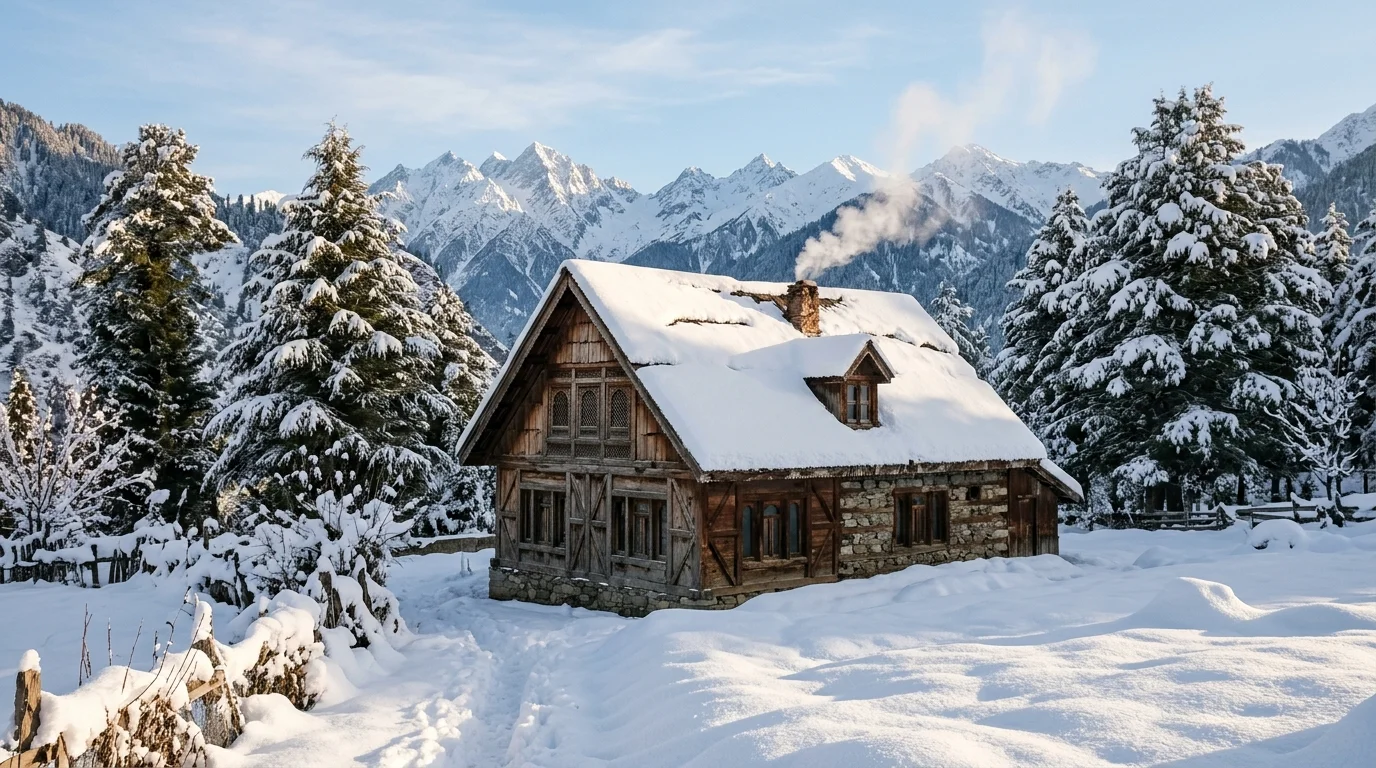
Packing for the Kashmir Valley requires preparing for rapid micro-climatic shifts: ambient daytime temperatures can reach +30°C in sunny Srinagar summer gardens, while high-altitude passes like Gulmarg Phase 2 (3,980 m) and Razdan Pass (3,558 m) experience sub-zero freezes, biting winds, and sudden snowfall year-round. The secret to staying comfortable across Kashmir’s changing altitudes is the Three-Layer Himalayan Principle (a breathable base layer, an insulating mid-layer, and a wind/waterproof outer shell), paired with crucial regional necessities that plains travelers often overlook—such as non-functioning outside prepaid SIM cards, rapid cold-weather battery drain, and specialized snow footwear. Below is the definitive season-by-season packing checklist, verified on the ground by Srinagar residents.
1. Four-Season Kashmir Packing Matrix
Consult this high-level temperature and wardrobe matrix to determine the foundational layers required for your travel month:
| Season & Months | Expected Temperatures | Weather Characteristics | Core Wardrobe Strategy |
|---|---|---|---|
| Deep Winter (Dec – Feb) |
-8°C to +7°C (Sub-zero nights) | Heavy snowfall in Gulmarg/Pahalgam; frozen lakes, frost, Chillai Kalan cold. | Heavy down parka (-10°C rated), merino thermals, high-calf snow boots, woolen caps, neck warmers. |
| Spring Bloom (Mar – Apr) |
4°C to 18°C | Snow thaw, blooming almond orchards, April Tulip Festival, occasional rain showers. | Medium fleece jackets, light thermals for evenings, water-resistant windbreakers, sturdy walking shoes. |
| Peak Summer (May – Aug) |
14°C to 30°C | Warm sunny days in Srinagar; pleasant cool breezes in Pahalgam/Gulmarg meadows. | Breathable cotton shirts, linen trousers, sunhat, UV sunglasses, 1 light jacket/cardigan for evening mountain chill. |
| Golden Autumn (Sep – Nov) |
0°C to 22°C (Sharp evening drop) | Crisp, clear blue skies, crimson Chinar foliage, saffron harvest, zero humidity. | Layered light sweaters, fleece jackets, comfortable trousers, medium-weight thermal set for late October/November. |
2. The Three-Layer Himalayan Principle Explained
Rather than packing one massive, bulky coat that leaves you sweating during active walking and shivering once stationary, alpine travelers rely on three modular layers that can be added or shed within seconds:
Layer 1: The Moisture-Wicking Base Layer (Thermals)
Your base layer sits directly against your skin. Its primary job is not just to provide warmth, but to pull perspiration away from your body so moisture does not freeze against your skin when you stop walking.
- What to Pack: 2 to 3 sets of high-grade thermal innerwear (top and bottom leggings).
- Best Material: Merino wool (naturally odor-resistant and warm even when damp) or technical polyester synthetics (like HeatTech from Uniqlo or thermal weaves from Columbia).
- Avoid: 100% pure cotton long johns. Cotton absorbs sweat, stays wet, and creates rapid body cooling in mountain winds.
Layer 2: The Insulating Mid-Layer (Fleece & Wool)
The mid-layer traps warm air generated by your body within its fibers, creating an insulating thermal buffer against exterior cold.
- What to Pack: 2 lightweight polar fleece zip jackets, 1 dense woolen pullover or cashmere sweater, and comfortable corduroy or fleece-lined trekking trousers.
- Utility: Perfect for indoor wear in Dal Lake houseboats, hotel dining rooms, and during car transit between valleys.
Layer 3: The Weatherproof Outer Shell (Down Parka / Windbreaker)
Your outer layer protects your insulating layers from external elements: high-altitude alpine gales on Apharwat Peak, falling snow, and mountain drizzle.
- Winter Travel (Nov to Mar): A hooded, water-resistant down parka with a minimum 650+ fill power down or heavy synthetic equivalent rated down to -10°C.
- Summer Travel (Apr to Sep): A lightweight, breathable waterproof rain jacket (Gore-Tex or nylon shell) that blocks chilly winds at high passes.
3. Footwear & Snow Traction Guide
Footwear mistakes ruin more Kashmir vacations than almost any other packing error. Cold, wet feet lead to rapid fatigue, numbness, and dangerous slips on icy mountain slopes.
1. Walking Shoes for Gardens & Heritage Walks
Bring 1 pair of comfortable, broken-in walking sneakers with cushioned EVA midsoles. You will walk thousands of steps navigating terraced Mughal gardens, boarding wooden Shikaras, and exploring the stone alleys of Old City Srinagar.
2. Waterproof Hiking Boots (High-Ankle)
If visiting in spring, autumn, or summer, bring sturdy hiking shoes with deep rubber lug soles (Vibram or equivalent) and waterproof membranes. High-ankle support is vital when hiking over loose river stones in Aru Valley, walking to Baisaran meadow, or traversing wet gravel paths near Thajiwas Glacier.
3. Snow Gumboots (The Tangmarg Rental Reality)
If visiting Gulmarg during winter snow (December to March), do not pack heavy, bulky rubber gumboots in your flight baggage. High-calf waterproof rubber snow boots are available for rent at Tangmarg for just ₹100 to ₹150 per day. Renting them locally saves massive suitcase weight while ensuring your personal leather shoes stay clean and dry.
4. Woolen & Thermal Socks
Pack at least 5 to 6 pairs of heavy woolen or merino blend socks for winter. Always carry a dry spare pair in your day backpack when ascending the Gulmarg Gondola so you can immediately change if snow enters your boots.
4. Critical Electronics & Cold-Weather Battery Management
Himalayan cold weather alters how modern lithium-ion batteries perform. Be prepared for these technical realities:
- Rapid Battery Voltage Drop: In sub-zero temperatures atop Mount Apharwat (3,980 m) or Razdan Pass, smartphone and camera batteries can drop from 80% to 0% within minutes as the chemical reaction slows.
- Pro Tip: Keep your phone and spare camera batteries in your inner jacket pocket directly against your body heat. Only take your phone out when snapping a photograph, then return it to your warm inner pocket.
- Heavy-Duty Power Bank (20,000 mAh): Carry a flight-approved 20,000 mAh power bank with fast-charging USB-C PD capabilities in your hand baggage. Hotel power in remote valleys like Gurez occasionally faces evening grid cuts.
- Camera Lens Condensation: When stepping from freezing outdoor snow (-5°C) directly into a heated hotel room or houseboat (+22°C), moisture will instantly condense inside your camera lens optics. Leave your camera zipped inside its padded camera bag for 30 minutes after entering a warm room to let it acclimatize gradually.
5. Telecommunications & Mandatory Identity Documents
Security regulations in Jammu & Kashmir are strictly enforced by the Department of Telecommunications (DoT) and the Ministry of Home Affairs:
The Prepaid SIM Card Block (Crucial)
Prepaid mobile SIM cards issued in any other Indian state (outside Jammu & Kashmir) will NOT receive cellular network signals anywhere in Kashmir. The moment your flight touches down at Srinagar Airport, outside prepaid SIMs will show "No Service".
- Solution 1 (Recommended): Carry an active Postpaid connection (Jio, Airtel, or BSNL Postpaid). Postpaid SIMs work seamlessly across the Kashmir Valley with high-speed 4G and 5G data.
- Solution 2: Purchase a local J&K prepaid tourist SIM card directly at Srinagar Airport (SXR). A dedicated BSNL/Jio verification kiosk operates in the arrival hall. Present your original Aadhaar Card and passport-size photo; the local SIM activates within 2 hours.
Mandatory Physical Government IDs
Carry original physical government photo identification for every traveling member (Aadhaar Card, Passport, Voter ID, or Driving License). Original IDs are mandatory for:
- Boarding the Gulmarg Gondola (name on digital boarding pass must match physical ID).
- Military checkposts at Tragbal, Razdan Pass, and Dawar (Gurez Valley).
- Police checkpoint entry into Sonamarg Zero Point / Zojila Pass.
- Srinagar Airport perimeter and terminal entry gates.
6. The High-Altitude Mountain Medical Kit
Pharmacies in central Srinagar are well-stocked, but remote mountain valleys (Aru, Gurez, Sonamarg) have limited medical stores. Assemble a compact personal medical pouch containing:
| Medication / Item | Primary Purpose | Ground Context |
|---|---|---|
| Motion Sickness (Avomine / Ondansetron) | Prevents nausea during winding mountain travel | Crucial for hairpin road climbs to Gulmarg, Pahalgam, and Razdan Pass. |
| Altitude Sickness (Diamox / Acetazolamide) | Aids high-altitude acclimatization | Consult your physician before travel if planning to ascend Gondola Phase 2 (3,980m). |
| Polarized Sunglasses (UV400) | Prevents snow blindness and eye strain | High-altitude Himalayan snow reflects up to 85% of blinding solar UV radiation. |
| Broad Spectrum Sunscreen (SPF 50+ PA++++) | Prevents severe mountain sunburn | Thin alpine atmosphere provides less UV filtration; apply every 3 hours. |
| Heavy Moisturizing Cream & Lip Balm | Treats severe skin cracking and chapped lips | Cold mountain air has zero humidity; petroleum jelly or shea butter is essential. |
| Electrolyte Sachets (ORS / Electral) | Maintains cellular hydration | Dry mountain air causes rapid moisture loss through breathing. |
| Pain Reliever / Antipyretic (Paracetamol / Ibuprofen) | Treats altitude headaches and muscle soreness | Helpful after walking on snow or long road journeys. |
7. What NOT to Pack for Kashmir
- Bulky Rubber Snow Boots (Rent Them Instead): Unless you are an alpine ski racer with custom-molded boots, save suitcase space by renting gumboots at Tangmarg for ₹100/day.
- Thin High-Heeled Shoes or Stilettos: Cobbled Old City alleys, wooden Shikara embarkation planks, and gravel garden pathways make high heels completely impractical.
- Drones (Quadcopters): Flying consumer drones is strictly prohibited across the Kashmir Valley without prior defense clearance. Drones will be confiscated at Srinagar Airport security.
- Pure Cotton Base Layers: Cotton traps moisture and freezes against your skin. Rely entirely on technical synthetics or merino wool.
8. Printable Master Packing Checklist
- [ ] Original Physical Government Photo ID (Aadhaar / Passport)
- [ ] Active Postpaid SIM Card (Jio / Airtel)
- [ ] Printed Boarding Passes & Gondola Digital Tickets
- [ ] ₹5,000 to ₹10,000 in Physical Cash (ATM emergency reserve)
- [ ] 2–3 Sets of High-Quality Thermal Innerwear
- [ ] 1 Wind/Waterproof Hooded Down Parka (Winter) or Rain Shell (Summer)
- [ ] 2 Polar Fleece or Cashmere Mid-Layers
- [ ] 5–6 Pairs of Heavy Woolen / Merino Socks
- [ ] 1 Pair Sturdy High-Ankle Walking Shoes / Sneakers
- [ ] Thermal Beanie Cap & Fleece Neck Warmer / Balaclava
- [ ] Waterproof Ski Gloves & Thermal Liner Gloves
- [ ] Polarized UV400 Sunglasses
- [ ] SPF 50+ Sunscreen & Intensive Lip Balm
- [ ] 20,000 mAh Fast-Charging Power Bank
- [ ] Mountain Medical Kit (Avomine, Diamox, ORS, Paracetamol)
9. Frequently Asked Questions (PAA SERP Analysis)
Do prepaid mobile SIM cards work in Kashmir?
No. Under Department of Telecommunications (DoT) security mandates, all prepaid SIM cards issued outside Jammu & Kashmir are blocked. You must travel with an active Postpaid connection (Jio and Airtel offer the best 5G/4G valley coverage) or purchase a local J&K prepaid SIM card at Srinagar Airport arrival hall using your Aadhaar card.
How cold does it get in Kashmir during summer?
In Srinagar during peak summer (June to August), daytime temperatures are pleasantly warm (24°C to 30°C), requiring only light cotton clothes. However, evenings along Dal Lake drop to 15°C, and high-altitude destinations like Gulmarg Phase 2 and Sonamarg frequently experience brisk winds of 8°C to 12°C. Always pack at least one warm fleece jacket and a light windbreaker even in mid-summer.
Can I buy traditional warm Kashmiri clothes locally?
Yes! Purchasing a traditional Kashmiri Pheran (a loose, woollen tweed tunic worn over your clothes) in Lal Chowk or Srinagar Old City is one of the best and most comfortable ways to stay warm. Genuine hand-embroidered wool Pherans range from ₹1,200 to ₹3,500.

Experienced Kashmir travel guide specializing in female solo travelers, family trips, winter sub-zero packing systems, and offbeat meadow trails like Doodhpathri and Yusmarg.
🛡️ Ground-Verified Fact Checking • Srinagar Travel Desk
Plan Your Kashmir Journey with Local Confidence.
Have questions about official taxi union rates, Gondola booking windows, or current seasonal weather? Tell us your dates. Our Srinagar desk verifies your plan and gives you honest local advice in 4 hours.