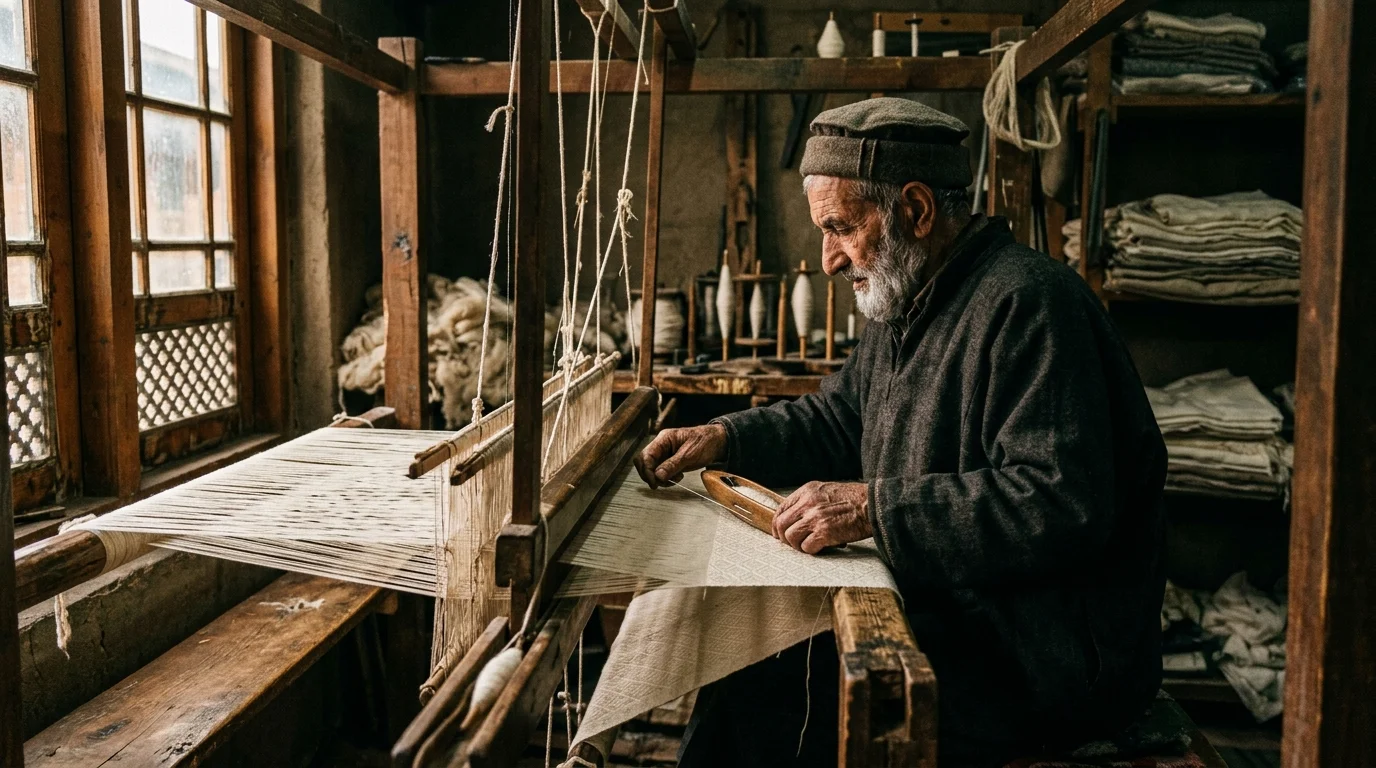
A genuine Kashmiri Pashmina is one of the world's most exquisite textile masterpieces—spun from the feather-light underfleece of the high-altitude Changthangi capra hircus goat (grazing at 14,000+ feet in Ladakh) and painstakingly hand-woven on wooden looms in the historic neighborhoods of Downtown Srinagar. However, for tourists landing in the valley, the market is an absolute minefield. Over 70% of shawls peddled in hotel arcades, roadside souvenir shops, and Gulmarg ski huts as "100% pure pashmina" are cheap machine-made viscose, powerloom Merino blends, or synthetic Chinese polyester treated with softening silicone oils. In this comprehensive, ground-verified guide, our local team tears down the exact tests, official Geographical Indication (GI) verification protocols, authentic price bands, and verified artisan clusters so you bring home an heirloom, not a plastic counterfeit.
1. Quick Reference: Kashmir Pashmina Buying Snapshot
| Shawl Category | Crafting Technique | Fair Ground Price (2026) | Authenticity Verification Marker |
|---|---|---|---|
| Plain Classic Handloom Pashmina | Hand-spun, hand-woven diamond (Chashm-e-Bulbul) or twill weave | ₹8,500 – ₹16,000 | Physical GI micro-tag with secure QR code; passes burn test with wood-smoke aroma |
| Sozni Hand-Embroidered Pashmina | Needlepoint embroidery using fine silk or wool floss (takes 3 to 12 months) | ₹18,000 – ₹45,000 | Reversible neat needlework (Dorukha); no machine thread loops on reverse |
| Kani Loom Shawl | Woven knot-by-knot using small wooden eyeless spools (Tujis) based on coded script (Talim) | ₹45,000 – ₹2,50,000+ | Kani GI registration number; intricate seamless interlocking weave; 6–18 months labor |
| Machine-Made Viscose / Acrylic (Fake) | High-speed industrial powerlooms in Amritsar or Surat using synthetic yarn | ₹800 – ₹2,500 (Often sold to tourists for ₹8,000) | Melts into hard plastic bead; toxic chemical smell; ultra-perfect machine selvedge edges |
2. The Anatomy of Real Pashmina: Ladakh Goat to Srinagar Loom
To understand why pure Pashmina carries significant value, travelers must understand its uncompromising botanical and zoological origins:
- The Raw Fiber (Pashm): Real pashmina does not come from sheep; it comes from the winter undercoat of the Changthangi goat (Capra Hircus), which survives winter temperatures of -40°C on the windswept Changthang plateau of Ladakh. Each goat yields only 150 to 200 grams of raw down per year.
- Micron Count: Pure Pashm fibers measure between 12 to 15.5 microns in diameter. By comparison, fine Australian Merino wool is 18–24 microns, and human hair is roughly 75 microns. Because the fiber is so ultra-fine, it is physically impossible to weave raw pure Pashmina on high-speed industrial powerlooms—the delicate tensile fibers snap instantly under mechanized tension.
- Hand-Spinning on the Yender (Charkha): Women in residential neighborhoods across Downtown Srinagar (Nowhatta, Khanyar, Eidgah) hand-spin raw pashm onto wooden spinning wheels into ultra-fine yarn.
- Hand-Weaving on Traditional Wood Looms (Saaz): Male master weavers (Wovur) mount the warp and hand-weave the classic diamond pattern (Chashm-e-Bulbul, eye of the nightingale). A single plain stole requires 4 to 8 days of unbroken hand-loom time.
3. The 4 Foolproof Tests: How to Spot Fake Pashmina on the Spot
Shops in tourist hubs rely on elaborate showroom theatrics—most famously the "Ring Test"—to convince travelers. Here is the unvarnished truth about testing shawls on the spot:
1. The "Ring Test" Myth (Why It Proves Nothing)
Every tout on Boulevard Road or inside Dal Lake will offer to slide a shawl through a brass finger ring to "prove" it is 100% pure pashmina. Do not fall for this. Thin, synthetic Chinese polyester and fine viscose slide through a ring with even less friction than genuine raw wool. The ring test only proves that the fabric is thin—it tells you zero about fiber purity.
2. The Microscopic Burn Test (The Definitive Test)
Reputable weavers will readily allow you to snip a tiny single fringe thread (1 cm) from the corner tassel for a flame test:
- Genuine Pashmina: Burns with a small flame, does not melt, produces a distinctive smell of burning natural hair or burnt feathers (keratin protein), and leaves behind a soft, powdery ash that crushes completely between your fingers.
- Fake / Synthetic Blend: Melts immediately into a sticky flame, emits black smoke with a pungent chemical or burning plastic odor, and leaves behind a hard, unyielding plastic bead that cannot be crushed into powder.
3. Inspecting the Fringe and Weft Edges
Pure handloom pashmina always features raw, natural frayed edges or hand-twisted fringe tassels. If a shawl has perfectly trimmed, razor-straight machine-serged overlock stitching on the side hems, it was rolled off an industrial powerloom machine in Punjab or Gujarat, not woven on a wooden loom in Srinagar.
4. The Government GI (Geographical Indication) Registry Tag
To protect Kashmiri heritage against mass-produced industrial fakes, the Government of Jammu & Kashmir and the Craft Development Institute (CDI) established the Kashmir Pashmina GI Tag. Certified shawls carry a tamper-proof, microscopic laser-inscribed tag with a unique alphanumeric code. You can scan this tag using a smartphone camera on the official Kashmir Pashmina GI Registry portal to see the weaver's name, fiber micron test results, and laboratory certification date.
4. Realistic Price Benchmarks (What You Should Actually Pay in 2026)
Because raw Ladakh cashmere costs approximately ₹4,000 to ₹5,500 per kilogram before de-hairing, cleaning, spinning, and weaving, there is a hard mathematical floor below which pure hand-woven pashmina cannot exist:
- Under ₹5,000: 100% guaranteed synthetic viscose, semi-pashmina blend (85% Merino wool + 15% nylon/acrylic), or Amritsar powerloom fleece.
- ₹8,500 – ₹14,000: Fair direct-artisan price for a solid 100% pure hand-woven diamond-weave Pashmina stole or shawl (2m x 1m).
- ₹15,000 – ₹30,000: Solid pashmina with intricate borders (Hashidar) or delicate corner motifs (Kunjbuta) in fine silk needlepoint embroidery (Sozni).
- ₹35,000 – ₹85,000+: Heavy full-surface needlepoint (Jaalidaar) where the weaver spends 6 to 18 months covering the entire surface with floral Paisley or Chinar motifs.
- ₹75,000 – ₹3,00,000+: Masterpiece certified Kani shawl woven knot-by-knot in Kanihama village using traditional wooden spools.
5. Where to Buy Real Pashmina in Srinagar (Zero Commission Zones)
Rule #1 of buying textiles in Kashmir: Never let a shikara rower, house-boat owner, or private taxi driver take you to their "uncle’s wholesale factory." Drivers receive 25% to 40% hidden cash commissions added directly to your bill. Instead, visit these direct, non-commission institutions:
- J&K Government Arts Emporium: Located at Sher-i-Kashmir Park, Residency Road, Srinagar. Fixed prices, 100% lab-verified GI tags, and zero bargaining games. Ideal for stress-free shopping.
- Kashmir Artisan Direct Cooperatives (Downtown Srinagar): The lanes of Nowhatta, Zaina Kadal, and Hawal house multi-generational artisan families working directly at home. You can hear the wooden clatter of looms and sit on clean carpets while choosing un-dyed or naturally dyed pieces directly from the weaver.
- Kanihama Village (The Kani Hub): Located 20 km southwest of Srinagar on the highway to Gulmarg. Kanihama is designated as a protected Handloom Craft Village where you can watch Kani weavers operating wooden tujis and purchase direct from master craft guilds.

Experienced Kashmir travel guide specializing in female solo travelers, family trips, winter sub-zero packing systems, and offbeat meadow trails like Doodhpathri and Yusmarg.
🛡️ Ground-Verified Fact Checking • Srinagar Travel Desk
Plan Your Kashmir Journey with Local Confidence.
Have questions about official taxi union rates, Gondola booking windows, or current seasonal weather? Tell us your dates. Our Srinagar desk verifies your plan and gives you honest local advice in 4 hours.